Unlocking the Power of AI in Sales and Marketing: Benefits, Use Cases, and Implementation Tips
Artificial Intelligence (AI) is revolutionizing the way businesses approach sales and marketing. From predictive analytics to personalized customer experiences, AI in sales and marketing is no longer a futuristic concept—it’s a present-day necessity.

The Role of AI in Sales and Marketing
AI in sales and marketing refers to the use of machine learning models, natural language processing (NLP), and data analytics to automate, optimize, and personalize customer interactions. It enables businesses to analyze large volumes of data, predict customer behavior, and make smarter decisions.
The digital transformation in sales and marketing is largely driven by AI adoption. AI-powered tools enhance targeting accuracy, streamline workflows, and improve customer engagement. From AI-generated marketing content to intelligent sales assistants, the impact of artificial intelligence in business is profound.
Top Use Cases of AI in Sales and Marketing
AI use cases in marketing and sales are vast and growing. Let’s look at some of the most impactful ones:
Personalized Marketing with AI
AI helps create hyper-personalized campaigns by analyzing customer data and behavior. This ensures that the right message reaches the right person at the right time.
Predictive Analytics in Sales
Using AI-based sales forecasting, businesses can predict future trends, sales outcomes, and buyer intent, enabling more accurate decision-making.
AI in Content Marketing
AI-generated marketing content helps teams produce blogs, emails, and social media posts faster and more effectively.
Smart CRM and Sales Enablement Technology
Smart CRM systems and AI sales tools assist reps by suggesting next-best actions and automating routine tasks.
Personalized Marketing with AI
AI helps create hyper-personalized campaigns by analyzing customer data and behavior. This ensures that the right message reaches the right person at the right time.
Predictive Analytics in Sales
Using AI-based sales forecasting, businesses can predict future trends, sales outcomes, and buyer intent, enabling more accurate decision-making.
AI in Content Marketing
AI-generated marketing content helps teams produce blogs, emails, and social media posts faster and more effectively.
Smart CRM and Sales Enablement Technology
Smart CRM systems and AI sales tools assist reps by suggesting next-best actions and automating routine tasks.
AI for Customer Segmentation
AI identifies and groups customers based on shared traits and behaviors, improving the effectiveness of targeted campaigns.
Conversational AI and Chatbots
AI-powered customer service via chatbots enhances the customer journey and reduces response times.
Implementation Tips: How to Adopt AI in Marketing and Sales
Define Clear Objectives
Before diving in, identify your goals whether it’s improving campaign performance, automating sales, or enhancing customer service.
Choose the Right AI Tools
Select AI marketing platforms and AI CRM tools that integrate seamlessly with your existing tech stack.
Start with Data
Ensure your marketing data integration is clean and accurate. AI’s effectiveness depends heavily on high-quality data.
Begin with Small Projects
Start with AI-driven workflows or a specific campaign to test the waters before scaling.
Train Your Team
Invest in training to help your team adapt to AI-powered tools and workflows.
Monitor and Optimize
Continuously track results using real-time analytics to refine your AI marketing strategy.
Future of AI in Sales and Marketing
The future of AI in sales and marketing lies in deeper personalization, voice search optimization, predictive intent modeling, and increased automation. As AI tools become more advanced, businesses will rely more on data-driven marketing decisions and intelligent sales automation to stay competitive.
AI adoption in marketing is not just about technology it’s about transforming how brands connect with customers, enhance the customer journey, and drive measurable results.
Key Benefits of AI for Sales and Marketing
AI offers a multitude of advantages that contribute to increased conversion rates and improved customer satisfaction. Here are some of the top benefits:
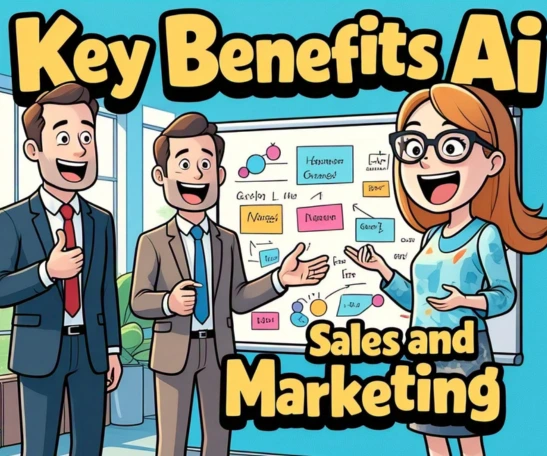
Table: Key Benefits of AI
| Use Case | Description |
|---|---|
| Personalized Marketing | AI tailors messages based on customer behavior analytics. |
| Improved Customer Engagement | Conversational AI and chatbots provide real-time support. |
| Sales Automation | AI for pipeline management and lead prioritization enhances efficiency. |
| Predictive Lead Scoring | Smart CRM systems identify high-value prospects. |
| Campaign Optimization | AI tools improve A/B testing and performance tracking. |
| Reduced Marketing Costs | Marketing automation with AI cuts redundant efforts. |
| Shortened Sales Cycles | Intelligent sales assistants accelerate deal closures. |
| ROI Improvement | AI-driven strategies contribute to better marketing ROI. |
| Enhanced Productivity | AI automates repetitive tasks, freeing time for strategic work. |
Conclusion
AI in sales and marketing is transforming the way businesses operate by increasing efficiency, boosting conversions, and delivering personalized experiences at scale. Whether it’s through smart CRM systems, predictive analytics, or AI-powered customer service, the integration of artificial intelligence in marketing and sales strategies is no longer optional—it’s essential.
With the right tools, training, and strategy, companies can leverage AI to fuel digital transformation, improve marketing ROI, and achieve sustained business growth.
FAQ
Here are 5 Frequently Asked Questions (FAQs) “Unlocking the Power of AI in Sales and Marketing”:
AI improves sales performance by automating time-consuming tasks, enabling predictive lead scoring, and helping sales teams prioritize the most promising prospects. Tools like smart CRM systems and AI-based sales forecasting allow for more accurate decision-making and shortened sales cycles, ultimately leading to higher conversion rates and enhanced productivity.
Real-world use cases of AI in marketing include personalized marketing campaigns, AI-generated content, customer segmentation, dynamic ad targeting, A/B testing optimization, and marketing automation platforms. These applications help businesses engage customers with relevant messaging and improve campaign performance in real time.
Essential AI tools for sales and marketing include AI CRM tools, sales automation platforms, conversational AI chatbots, email marketing AI tools, and campaign performance optimization software. These tools form the backbone of a modern marketing tech stack and help streamline processes, from lead nurturing to customer support.
To successfully implement AI, businesses should start with clean data through marketing data integration, set clear goals, choose suitable AI tools, and begin with small-scale projects. Training teams and regularly monitoring results using real-time analytics ensures continuous improvement and alignment with marketing objectives.
The main benefits include improved customer engagement, enhanced targeting accuracy, increased conversion rates, cost reduction, personalized customer journeys, and improved ROI. AI adoption leads to smarter decision-making, streamlined workflows, and more effective sales enablement technology.
-
 Eliane Owner of Wize Consult
Next Debug did a Great work ! one of the best Company I have had the pleasure to work with ! highly recommended !!
Read more -
 Raymond Owner of Key Biz
Excellent service provider. I real pleasure to work with Next Debug.
Read more -
 Cresita Owner of Sky Web Design
Next Debug did a great job. I look forward to working again.
Read more